Perimetro
site-specific acousmatic sound installation for 8 perimeter loudspeakers, dark room and fluorescent tape
concept and composition by Pierpaolo Ovarini, lyrics and vocal performance by Yuna Leonis
DAS, Bologna, 20/02/2026
Perimetero is a multichannel acousmatic installation that does not originate from the opera intended as an autonomous aesthetic object, instead from the space that hosts it. It is the space itself that becomes the true subject of the work: initially as a field of acoustic measurement, then as an abstract and emotional form through vocal measurement.
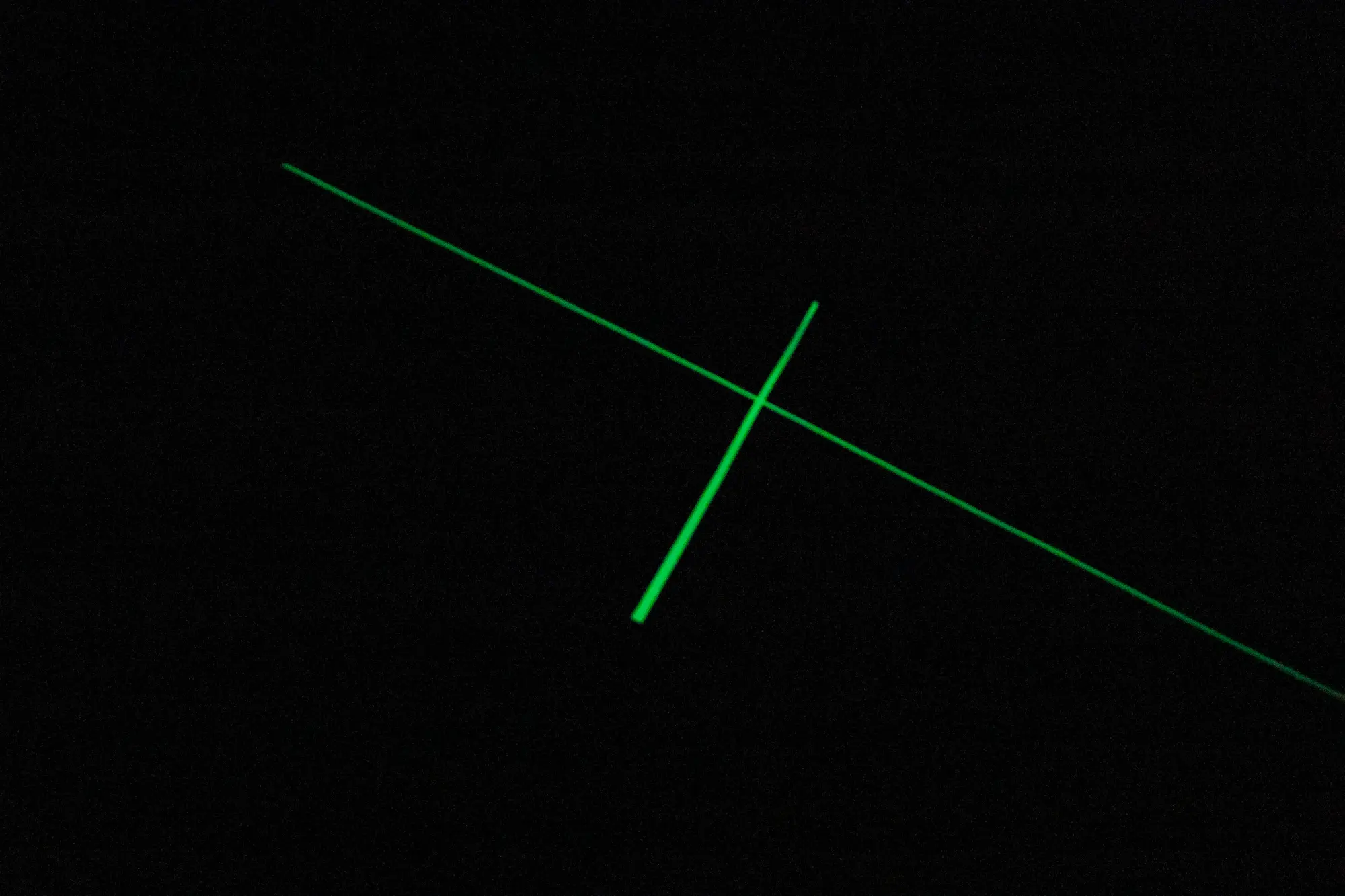
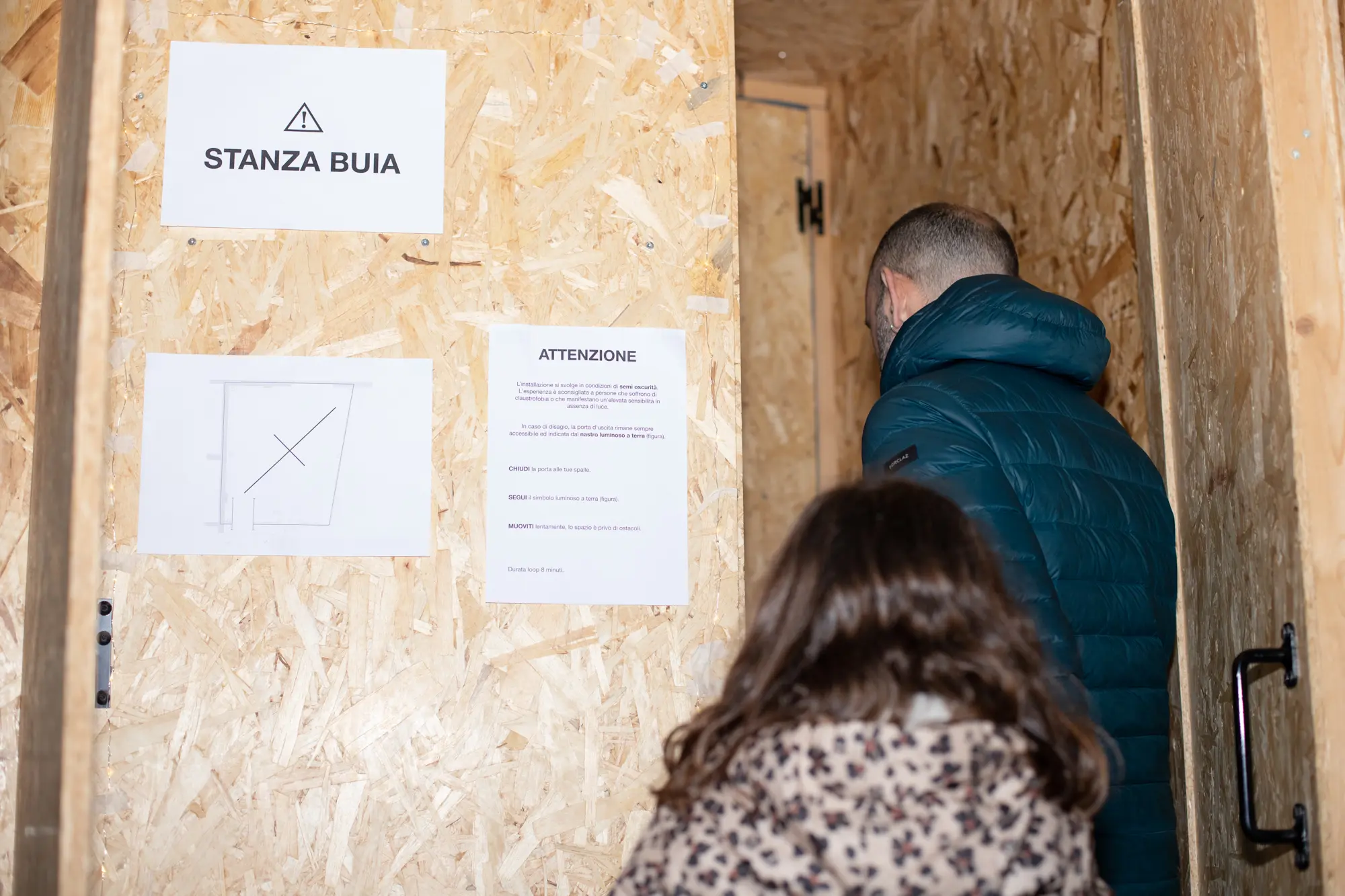
The environment is a dark room, devoid of clearly defined visual elements. On the floor, a fluorescent luminous trace does not actually illuminate the space, but acts as the only perceptual reference. The visual dimension is thus annulled, allowing sound to emerge as the main tool for orientation.
Along the perimeter, eight loudspeakers are arranged, reproducing a composition articulated in two sections. The first is made up of measurement sounds, constructed from three electronic archetypes: white noise, impulse and sine wave, chosen for their purity. These elements, usually considered sonic waste when used to measure acoustic space, are here brought to the foreground: they move between the speakers along geometric trajectories, tracing a sonic contour that allows the audience to perceive the perimeter, dimensions and material qualities of the space.
The second section introduces a sound material opposed to the neutrality of the electronic archetype: the voice. It is placed along a compositional axis that moves from acoustic measurement, in mimesis with the electronic sounds, towards an emotional measurement of the perimeter. The texts, drawn from poetic fragments by Yuna Leonis, who is also the vocal performer of the piece, include indicative words (north, south, east, west), quantitative ones (one, two, three) in different languages (Italian, French, English, Flemish), as well as simpler and more universal vocal sounds.
Diffused through the multichannel system, these elements play with the orienting function of sound, generating ambiguities and shifts: they state the number of the loudspeaker from which they come, provide wrong indications, employ unnatural reverbs and move towards a deconstructed form of song.
What emerges is a perceptual experience in which space enters the work as an active and mutable element. The relationship between body, sound, language and place is progressively constructed. The installation thus invites the listener to inhabit a dynamic environment in which the notion of orientation is not imposed, but continually negotiated.
Elisa Zanta